Friday, September 27, 2013

Do Not Go Gentle Into That Good Night (reflection)


Do Not Go Gentle Into That Good Night
By Dylan Thomas

There is something somewhat eerie and unsettling about a poem discussing a fear of death written by a man who died before reaching 40yrs old.  This poem advocates all throughout not to “go gently” into “that good night”, which the poem reveals to mean death.  It’s hard to figure out exactly what Mr. Thomas means by “go gently”.  It seems to me that this poem advocates against a quiet death of disease or age, to not accept it willingly and to fight it off, even though it may be inevitable.

This poem presents several different perspectives from which one may approach the idea of death, but they all end in the same conclusion, that it is the enemy that must be fought but cannot be defeated.

I’m particularly drawn to the second stanza;
“Though wise men at their end know dark is right,
Because their words had forked no lightning
Do not go gentle into the night.”
This strikes a particular cord with me in saying that, though wise men may realize the inevitability of death and know that it is the natural way of things, they do not welcome it, presumably because their words and thoughts are ultimately ineffectual to the natural world and have confirmed and accomplished nothing tangible or lasting.

In the last stanza is particularly emotional and a bit jarring because he enters a first person perspective directed towards his father, emotional and urgent, as though his father were dying and he were there telling, rather, begging him to “rage against the dying of the light.

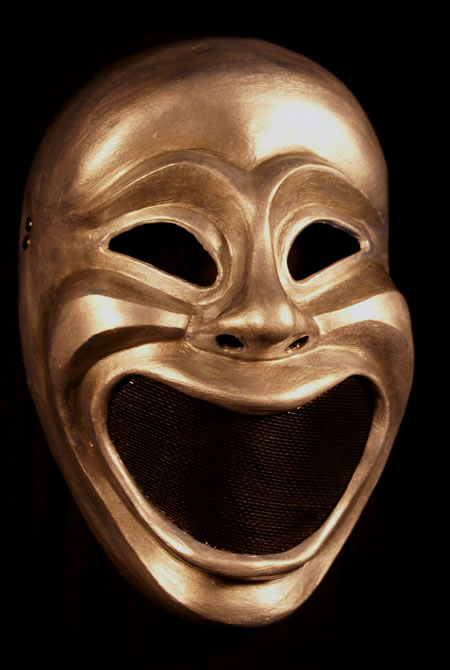
We Wear the Mask (response)


We Wear the Mask
by Paul Laurence Dunbar

This poem takes on a perspective of facetiously supporting something the author clearly does not for the sake of creating a dry satire, almost a kind of reverse psychology.  Initially the points made by the poem are more agreeable, but as the poem progresses, the metaphor becomes more sinister.  Initially it draws the comparison between the human face and a mask that both “grins and lies”, giving it a less than pure nature.  Next It poses a question; “Why should the world be over-wise in counting all our tears and sighs?” and answers by saying the mask is a positive feature in that it hides our inner emotions and lets us present ourselves to others in a matter that we want to be seen.

Personally, I think the last stanza is the most interesting and provocative, and could easily stand alone without the clutter above it, though it creates many questions.  It directs the poem to Christ, saying (with really fun word play), that the world is profoundly unpleasant, but we should mask our emotions and make others believe what we want them to about us.

I’m not sure what Mr Dunbar’s view was regarding religion, but I think this poem makes an interesting commentary of it and the mentality it represents.  That a religious person, in the name of their savior, may choose to deny their desires, emotions, and true self to appear happy and fulfilled to those around them and think themselves righteous for doing so.

Awake (reflection)


Awake 
by Jim Morrison

Shake dreams from your hair
My pretty child, my sweet one.
Choose the day and choose the sign of your day
The day's divinity
First thing you see.
A vast radiant beach in a cool jeweled moon
Couples naked race down by it's quiet side
And we laugh like soft, mad children
Smug in the wooly cotton brains of infancy
The music and voices are all around us.
Choose, they croon, the Ancient Ones. The time has come again.
Choose now, they croon beneath the moon beside an ancient lake.
Enter again the sweet forest.
Enter the hot dream.
Come with us.
Everything is broken up and dances.

_________________________________________________________________________________________

The entire American Prayer spoken-word album by The Doors is a work I hold in great esteem, but I selected this individual poem from the collection for reflection as it seemed the most structured, least lyrical, and most vividly imagined.
Awake, by Jim Morrison, is typical of Morrison’s cryptic, mythical style showcasing the majesty of nature as a sort of ancient, sacred, magic entity with references to astrology and other popular spiritual ideals of the youth of his time.

It took many times of going through this poem before I really started to understand his phrasing and description.  A phrase like “shake dreams from your hair” sounds very abstracted to me, but in the context of the poem it summons imagery of a beautiful girl waking up on a moonlit beach, shaking the sand from her hair against the a backdrop of a starry sky.

He puts himself  provocatively into the poem, a common practice that may have contributed to his status as a sex icon, and talks about racing naked on the beach ; “And we laugh like soft, mad children, Smug in the wooly, cotton brains of infancy.”  A romantic image unromanticized by not describing how it feels, but simply the external image of it, almost distant.  He proceeds to further beckon the audience; “Enter again the sweet forest. Enter the hot dream. Come with us.”  He has captured here the feeling of seduction, not by an individual, but by circumstance, and the audience is left to make a choice.

While I think this poem is beautiful, I’m certain there is more meaning and likely a specific circumstance tied to this poem that I will never know.

Tuesday, September 17, 2013

Untitled by PJ Kempen

(Title?)

Born with bloody hands
In a broken place
It won't come off
It set long ago

Born hungry and wanting
Dip my hands back in the blood
To pull out what I need
But it leaves me empty

Born indebted
To familiar faces I've never seen
For all the blood
They accrued for me

Born told I'm made of sin
That bloody faith
Will make me well
Baptismal delusion

Born with wet, blackened cash
Thrust from bloody hand to another
Unwanted
Necessary

Born into the bloody chain gang
Expected to sing their tired hymn
Of safe, numb captivity
And walk to their rhythm

I don't know the words.
I can't keep the beat.

Monday, September 2, 2013

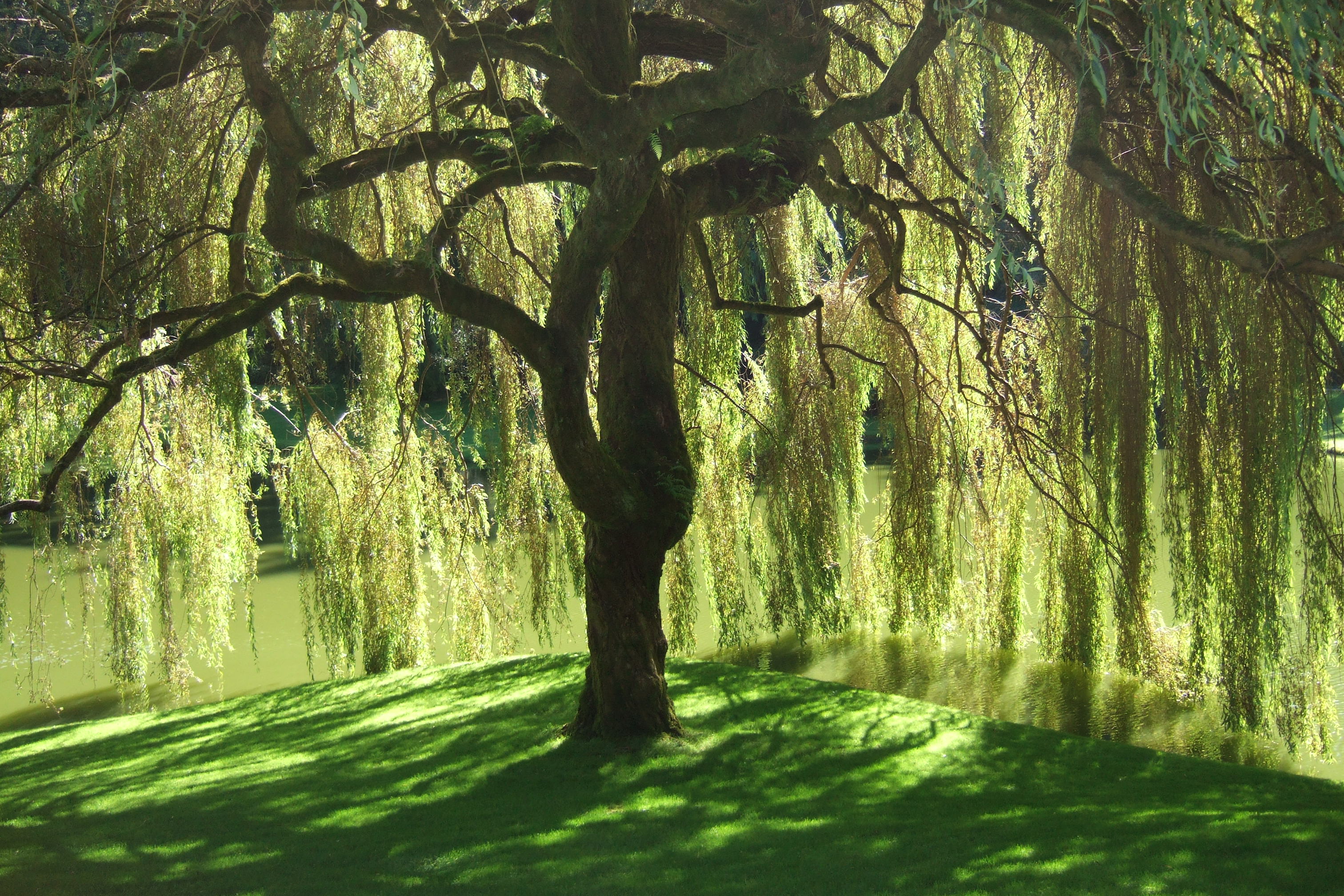
The Willow by PJ Kempen

The Willow
overgrown
envelops your home
with its blonde, wild maiden-hair
monolithic
atop the quiet hill.

Its roots spread out
like your raw, muddy toes
through the cool grass
beneath its canopy.

In the stillness
the low rumble of the gentle breeze envelops you.
A warm blanket on your bare arms and legs.

Run your hands through the branches.
Grab on to feel them pull back.

Hope in secret
that they'll pull you up
and carry you out of context.

Somewhere not bathed
in the sepia mist of childish ignorance
or the neon glare of the imaginary.
But they never pull that hard.

If you look through the branches
you can see the world outside
hidden
the things you're not supposed to see
the things you think are worth fighting for
because you'll have to fight to get them.
And you do.

Hands of a boy
mouth filled with words
you flee the quiet hill
to find something more  real.
And you do.
And it confirms all your fears
that everything that made sense was pretend
that everything you believed in was wrong
that everything you despised was law.

If you still believe or secretly hope
to be carried somewhere far away
do you wish to be back on the quiet hill
bathed in the sepia mist of childish ignorance
in the neon glare of the imaginary
under the cool, maiden-hair canopy
of the willow?

Friday, August 30, 2013

What do Women Want (reflection)


What Do Women Want  

by Kim Addonizio:


From the perspective of a man who has never seen or understood the inner workings of the female mind, this poem is both insightful and frightening, working to confirm many thoughts I've had to try to explain the workings of the common female psychosis.  This insight is combined with the striking womanly image of the revealing red dress.  The fact that it was written by a woman and it gives such a sinister tone to the attitude of the woman speaking in first person adds a dimension of honest self criticism to the poem that deepens the already profound insight.


So, according to this poem, what do women want?  She says she wants a red dress, but following in the fashion of the female mind, the red dress really isn't what she wants.  Shortly after saying she wants a red dress, she says she wants to wear it until someone tears it off of her.  What does this mean?  Apart from the obvious, it means she does not want to simply take it off for someone or give herself to someone.  She wants to be desired enough by someone for them to take her, to independently decide they want her without her having to put effort into seducing them.  She wants to be an object of desire.  She describes being seen by people she presumably knows in a part of town that sounds dirty and populous wearing her skimpy dress, adding an air of exhibitionism to her wish to be seen as an object of desire.


But following again in the ever-complicated fashion of female thought, it isn't that simple.  Near the end this new character, "you" is introduced, and she wants to confirm his (I assume it's a man) worst fears about her and show him how little she cares about him.  Now, this character could be an ex or even a current lover.  It could be one of her parents or any figure she has perceived as an figure of authority or influence in her life, but the specifics don't really matter.  The point is that she has revealed that she wants the red dress to be a sexual object of desire to spite someone else she feels somehow deserves her scorn.  I am inclined to believe it is some kind of lover or ex-lover situation, evoking some of the symbolism of the scarlet letter, where she is choosing to be an adulteress.


The ending of this poem turns the symbol of the red dress into a metaphor.  More than just an item of clothing it becomes a symbol of a choice of identity like "choosing a body", and that she is, at least in this moment of heated emotion, determined to maintain this chosen identity until she dies.  These last few lines are particularly revealing.  They reveal her association of an item of clothing with this promiscuous persona, that she is choosing this persona out of malice rather than genuine desire, and that her thoughts are not rationally based.


So, ultimately, what do women want?  Well... this woman wants a red dress to be a sexual object to scorn someone and continue scorning them until she dies.  This woman wants to cause painful retribution and fill a gaping hole in her self esteem.

The Street (reflection)


The Street by Stephen Dobyns:

"The Street" has a lot of cleverly worded, vivid imagery of a city street, describing the pedestrians as an insightful onlooker.  I'm intrigued by the nature of this poem, presumably being to describe a painting and the thoughts the painting gives the writer about the characters depicted.  In some places it could be taken as a tongue-in-cheek criticism of the painting, particularly the bit about the mother carrying off the grown baby that isn't really hers and is "very old", as the baby it is referring to doesn't really look like a baby in the painting.  I personally enjoy the metaphor of a girl disciplining her red ball and the baker who had half a thought and now stands awaiting another.

This poem, I think, suffers from trying to sound more profound than it really is in some places.  The first stanza is the one I take most issue with, which is bad for the poem as it should set the tone.

Across the street, the carpenter carries a golden
board across one shoulder, much as he bears the burdens
of his life.  Dressed in white, his only weakness is temptation.  Now he builds another wall to screen him.

The line "much as he bears the burdens of his life." has no contextual significance, adding nothing to the imagery of the scene or the character being described.  Is it that he bares his life burdens across one shoulder or just that he bares them and why does his having life burdens mean anything?  Are the boards the burdens of his life?  What is added to the imagery by adding this cliché sounding phrase?  Shortly after, the phrase "his only weakness is temptation." presents similar issues.  Both phrases suggest these dead-end ideas about the character that are contextually irrelevant, very difficult to visualize, and the writer does not elaborated on them.

The ending carries some neat insight but I question the ultimate relevance of it as well.  It says "these nine people circle each other... ...identical lives begun alone, spent alone, ending alone." This seems to detach from the painting it is describing, as the Asian couple and the mother and her very old baby are directly interacting, both in the painting and in the poem. The Asian couple are even having a particularly romantic moment.  My disillusionment toward the ending of the poem cheapens its minor insight.